Which phone plan has the best coverage for hiking, camping, and road trips in the PNW? A trail-tested guide to coverage on Mt. Rainier, the Olympic Peninsula, Oregon coast, and more.
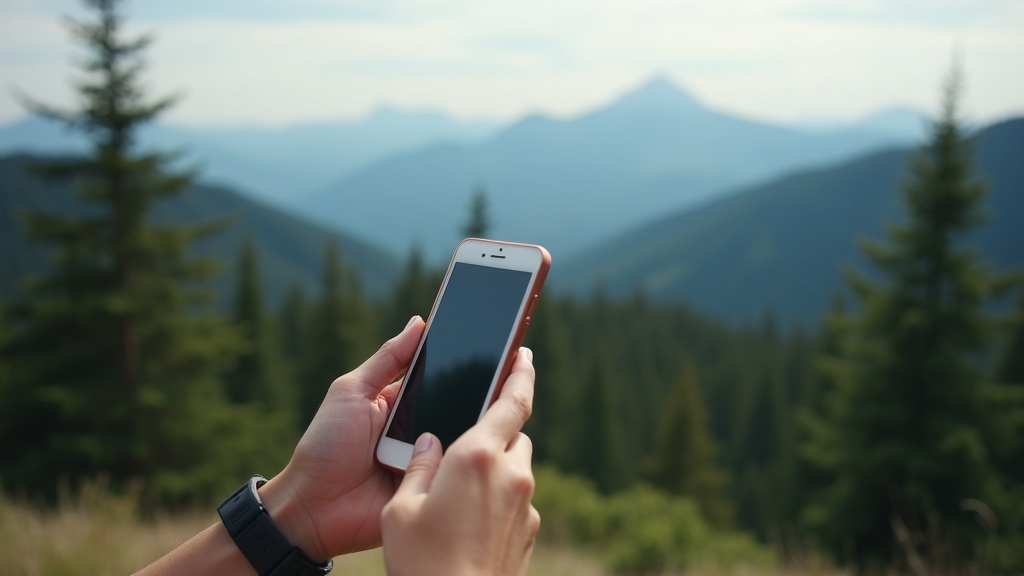
You’re two hours into a hike on the Skyline Trail at Mt. Rainier and your phone shows “No Service.” You’re not lost, but the parking situation was confusing and you want to text your friend who’s meeting you at Paradise. Nothing sends. You hold the phone up, walk to a clearing, try again. Nothing.
This is the reality for a lot of PNW hikers. The Pacific Northwest has some of the best outdoor access in the country and some of the worst cell coverage once you leave the highway. Mountains block signal. Old-growth forests absorb it. And the carriers that charge you $70 per month don’t invest in towers where nobody lives full-time.
But not all plans are created equal when it comes to outdoor coverage. Some approaches work better than others, and the difference between having signal and not having signal in the backcountry can come down to which networks your phone can access.
Why the PNW Is Hard on Cell Phones
The Pacific Northwest throws every possible challenge at wireless signals.
Mountains. The Cascades, Olympics, and Coast Range create massive physical barriers between cell towers and your phone. A tower in Enumclaw can’t reach the other side of Mt. Rainier.
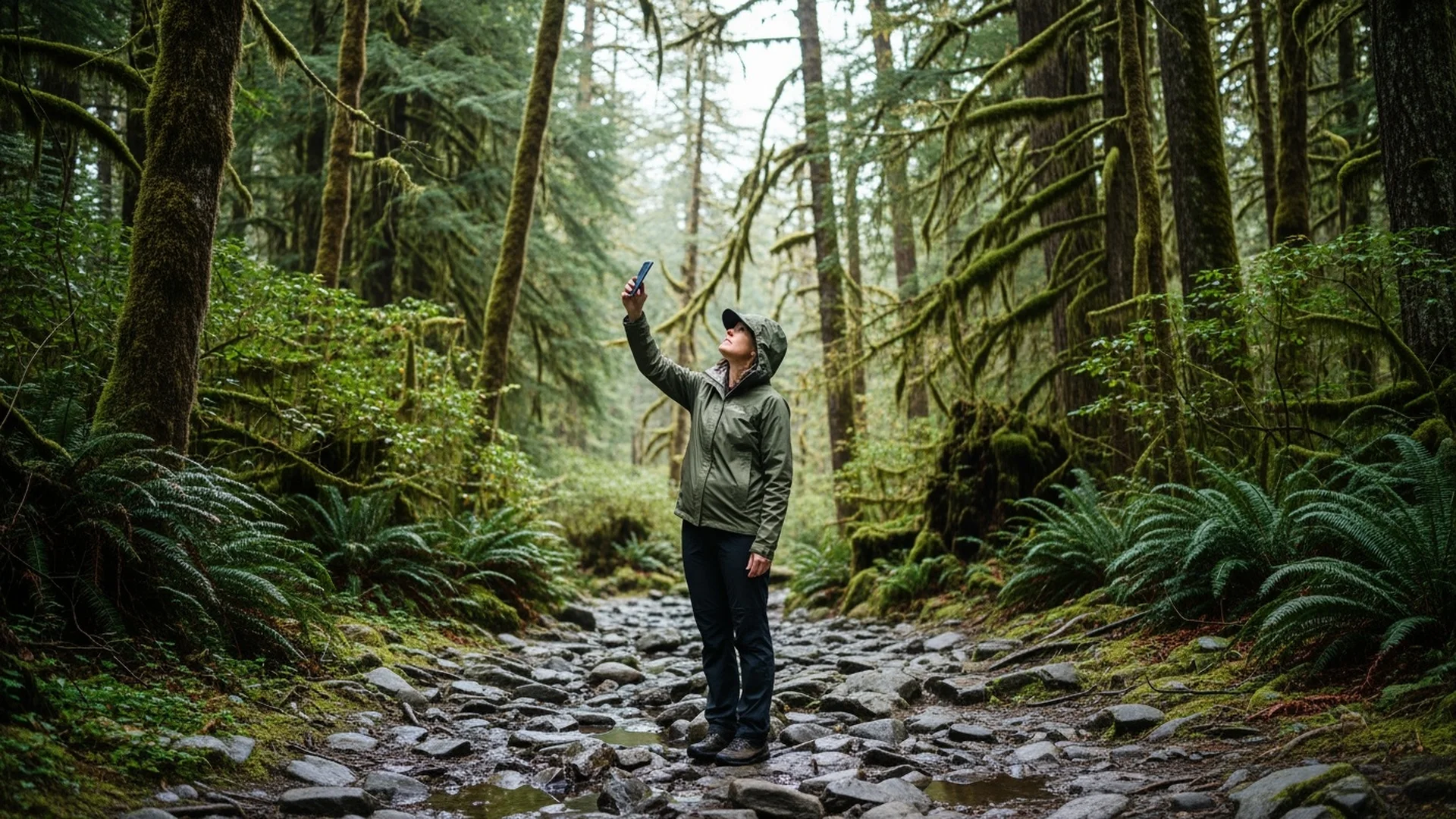
Dense forests. The wet climate produces thick tree canopy that absorbs signal. A phone that shows three bars in a parking lot might drop to one bar 200 yards into the trees.
Distance. Large stretches of the PNW are simply far from the nearest tower. The interior of the Olympic Peninsula and the less-developed parts of the Oregon coast have miles between cell sites.
Valleys. River valleys and canyons funnel signal poorly. If you’re in the bottom of the Elwha Valley or the Columbia River Gorge at water level, you’re below the line of sight to most towers.
None of this is specific to one carrier. Every carrier struggles with PNW geography. The question is which carrier gives you the best chance of connecting when it matters.
The Multi-Network Advantage for Outdoor Coverage
Here’s where phone plan choice actually makes a difference outdoors. Traditional carriers lock you to a single network. If you’re on T-Mobile and T-Mobile doesn’t have a tower near your trailhead, you get nothing. It doesn’t matter that there’s a Verizon tower half a mile away.
World Mobile partners with four major US networks. Your phone automatically connects to whichever partner network has the strongest signal at your location. At a trailhead where T-Mobile is weak but Verizon is strong, you connect to Verizon. At a campsite where AT&T has the only signal, you connect to AT&T.
This doesn’t guarantee coverage everywhere. Some places in the PNW genuinely have no signal from any carrier, and no phone plan fixes that. But having access to four networks instead of one meaningfully improves your odds of connecting in areas where coverage is patchy.
Think of it this way. If each major network covers 80% of a given area independently, being locked to one gives you 80% coverage. Being able to access all of them pushes you closer to 95% because different carriers fill different gaps.
Coverage by Region: What to Expect
Here’s an honest breakdown of outdoor coverage across major PNW recreation areas.
| Area | Coverage | Notes |
|---|---|---|
| Mt. Rainier — Paradise | Moderate | T-Mobile and Verizon have inconsistent signal; Sunrise is weaker |
| Mt. Rainier — Carbon River / backcountry | Very limited | Wonderland Trail has long stretches with zero signal on any carrier |
| Olympic Peninsula — Port Angeles / Sequim | Good | Last reliable signal before entering the park interior |
| Olympic Peninsula — Hoh / interior | Minimal to none | Mountains + forests + distance make this the hardest area in the PNW |
| Oregon Coast — Cannon Beach / Seaside | Full | Major tourist towns have strong coverage |
| Oregon Coast — Highway 101 gaps | Patchy | Good along the highway, weaker on beach trails and headlands |
| Mt. Hood / Gorge — I-84 corridor | Good | Interstate coverage is solid; trail coverage above the gorge drops fast |
| Mt. Hood — Timberline / backcountry | Limited | Developed areas have moderate signal; west side of Hood is remote |
| North Cascades — Highway 20 | Intermittent | Long gaps between Newhalem and Mazama; backcountry has almost nothing |
The pattern is clear: developed areas and highway corridors have workable coverage. Once you leave the road, signal drops on every carrier. A multi-network plan gives you the best shot at catching whatever signal exists in these transitional zones.
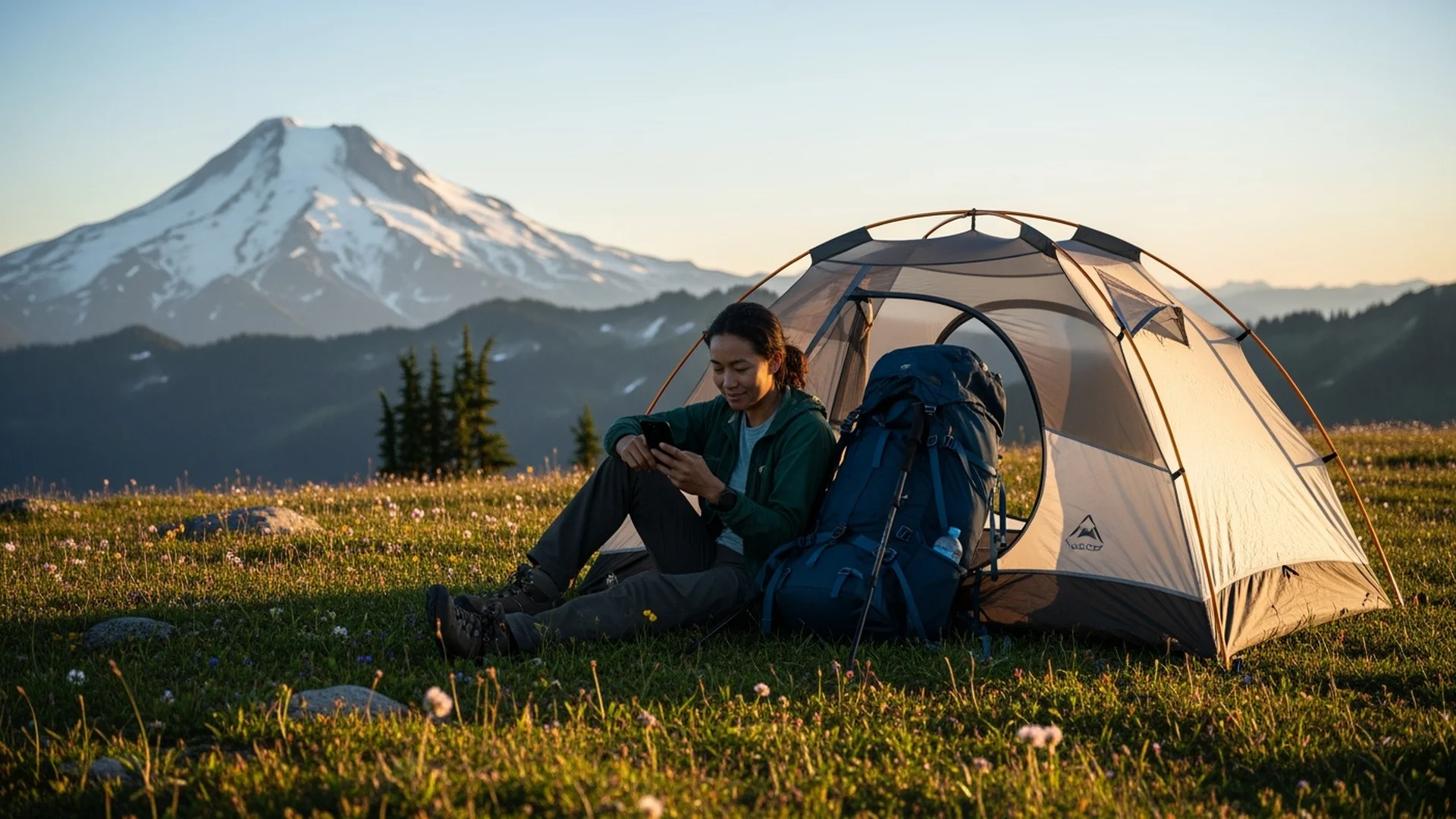
Phone Plan Comparison for PNW Outdoor Use
| Feature | World Mobile | T-Mobile | Verizon | AT&T |
|---|---|---|---|---|
| Networks accessed | 4 partner networks | T-Mobile only | Verizon only | AT&T only |
| Starting price | $15/mo | $50/mo | $45/mo | $50/mo |
| Contract required | No | No | No | No |
| Built-in VPN | Yes, every plan | $5/mo add-on | Premium plans only | No |
| Hotspot included | Yes, every plan | Limited plans | Limited plans | Limited plans |
| eSIM activation | Yes | Yes | Yes | Yes |
| Rural coverage strength | Best of all 4 networks | Strong in cities, gaps in rural | Broadest single-network rural coverage | Weakest rural in PNW |
Verizon has the broadest single-network rural coverage in the PNW. But a multi-network plan that accesses Verizon’s network plus three others covers more ground than Verizon alone — at a lower price.
The Practical Setup
Here’s what a well-prepared PNW outdoor enthusiast’s communication setup looks like:
- World Mobile Standard or Unlimited plan ($25-40/mo) for everyday use and trailhead coverage across four networks
- Offline maps downloaded before every trip (AllTrails, Gaia GPS, or Google Maps offline areas)
- Satellite communicator (Garmin inReach or Apple Satellite SOS) for deep backcountry trips where no cell coverage exists
- Portable battery pack because none of this works if your phone is dead
This setup costs less per month than a single line on Verizon’s premium plan, and it gives you better coverage and safety in the field.
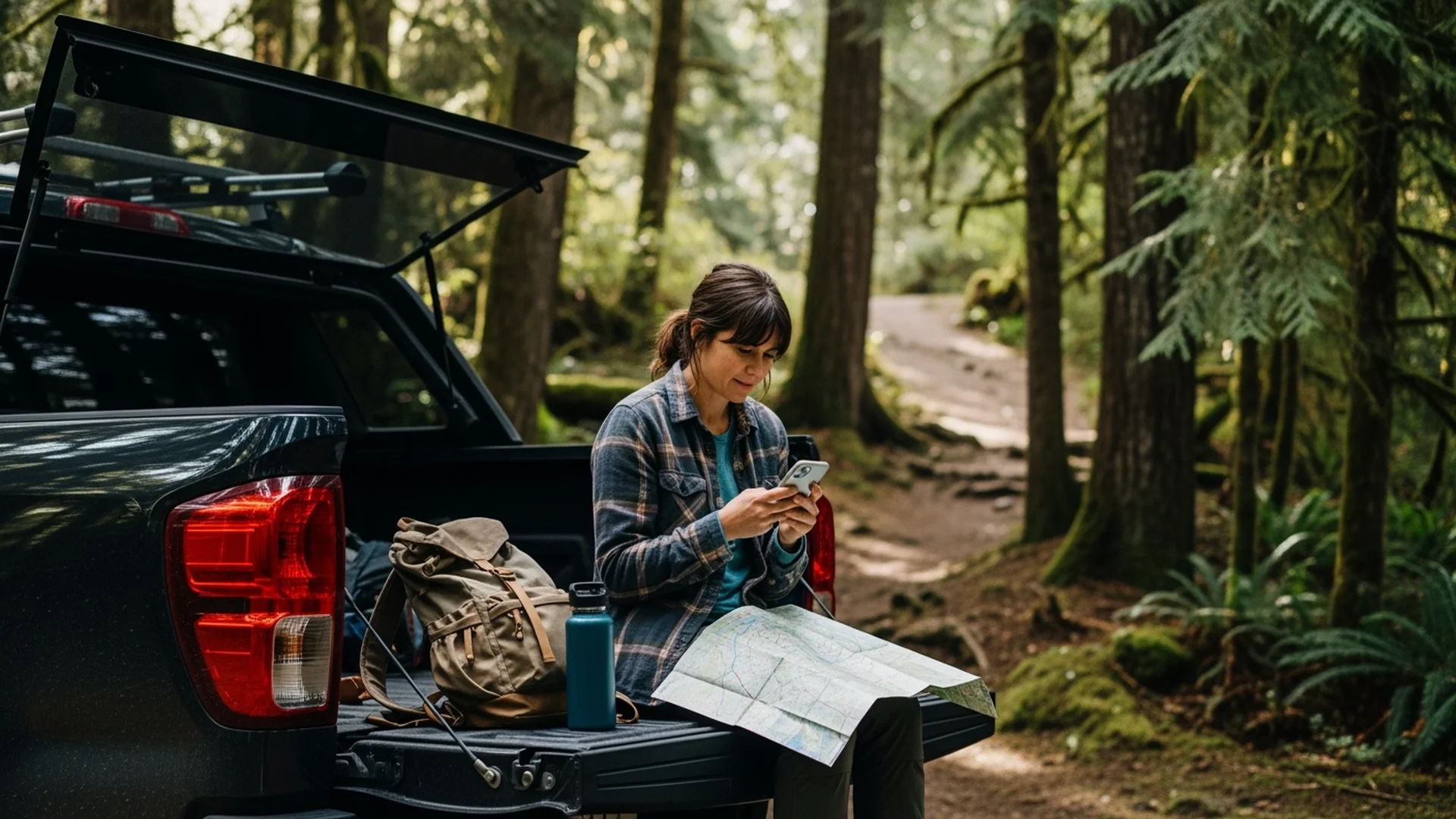
For a broader comparison of phone plans across the region, see our Pacific Northwest phone plans compared guide. And for city-specific coverage details, check the plan pages for Seattle, Bellingham, Tacoma, Portland, and Spokane.
The Bottom Line
No phone plan gives you perfect coverage in the PNW backcountry. The mountains and forests make sure of that. But a plan that connects to multiple networks gives you the best odds of having signal when you need it — at trailheads, along highways, in campgrounds, and in the transitional zones between civilization and wilderness.
World Mobile’s four-network approach covers more ground than any single carrier for a fraction of the price. Plans start at $15/month with no contracts, and every plan includes hotspot and a built-in VPN.
Spend less on your phone plan. Spend more time outside.
Ready to switch? Plans start at $15/mo.
Sign Up at HexyMobileStay in the Loop
Phone plan tips, coverage updates, and deals for the PNW. No spam.